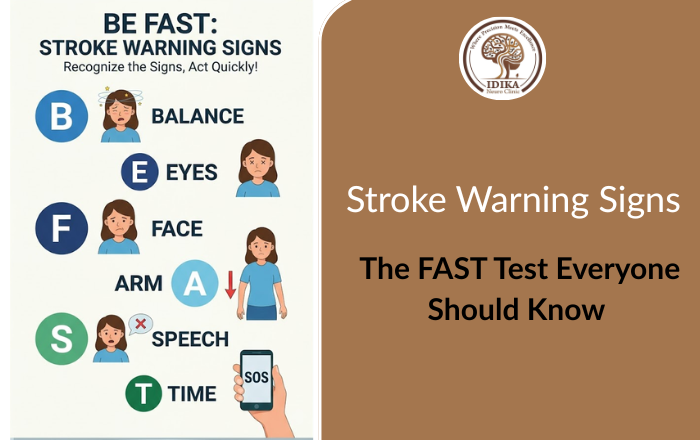
A stroke can happen suddenly, and the first few minutes can make a significant difference. Recognising the stroke warning signs quickly can help a person receive emergency medical care without unnecessary delay. One of the simplest ways to remember the most common warning signs is the FAST test: Face, Arms, Speech and Time.
Knowing how to use FAST can be helpful not only for older adults but for anyone who may suddenly develop neurological symptoms. Stroke can occur at different ages and may present with symptoms such as facial weakness, difficulty speaking, numbness, problems with balance or sudden vision changes.
What Is the FAST Test for Stroke?
The FAST test for stroke is a simple way to identify three important stroke symptoms and remember that immediate medical attention is needed.
F means Face: Ask the person to smile. Does one side of the face droop or look uneven?
A means Arms: Ask the person to raise both arms. Is one arm weak, numb or drifting downward?
S means Speech: Ask the person to repeat a simple sentence. Is their speech slurred, confused or difficult to understand?
T means Time: If any of these symptoms appear suddenly, seek emergency medical help immediately. Note the time when the symptoms first started, as this information can help healthcare professionals assess and treat the condition.
The FAST test is not a diagnostic test. It is a quick recognition tool designed to help people identify possible stroke symptoms and act promptly.
Stroke Warning Signs: How to Recognise Them
Stroke symptoms usually begin suddenly. While FAST focuses on some of the most recognisable symptoms, a stroke can cause other neurological changes as well.
Face Drooping
One side of the face may suddenly become weak or numb. The person’s smile may appear uneven, or one side of the mouth may droop.
Arm Weakness or Numbness
A person may suddenly have difficulty lifting one arm or keeping both arms raised. Weakness or numbness is often more noticeable on one side of the body.
Speech Difficulty
Speech may suddenly become slurred, unclear or difficult to produce. A person may also have difficulty understanding what others are saying.
Other Sudden Stroke Symptoms
A stroke may also cause:
- Sudden weakness or numbness of the face, arm or leg, particularly on one side
- Sudden difficulty walking or loss of balance
- Sudden dizziness or coordination problems
- Sudden blurred, double or reduced vision
- Sudden confusion or difficulty understanding speech
- A sudden, severe headache without an obvious cause
- Sudden nausea or vomiting in some cases
Not everyone experiences the same symptoms. The absence of one FAST symptom does not rule out a stroke.
Why Does Every Minute Matter During a Stroke?
A stroke occurs when blood flow to part of the brain is interrupted, usually because of a blocked blood vessel, or when a blood vessel in the brain ruptures and causes bleeding. Without adequate blood and oxygen, brain cells can become damaged.
This is why suspected stroke should be treated as a medical emergency. Waiting to see whether symptoms improve can delay potentially appropriate treatment.
If someone suddenly develops symptoms that could indicate a stroke, remember:
- Recognise the symptoms.
- Note the time they started.
- Seek emergency medical help immediately.
- Do not wait for the symptoms to disappear.
- Do not attempt to diagnose or treat the condition at home.
What If Stroke Symptoms Go Away?
Stroke-like symptoms that disappear should not simply be ignored.
A transient ischemic attack, or TIA, can cause symptoms similar to a stroke but may resolve after a short period. Even though the symptoms disappear, a TIA can be a warning sign of a possible future stroke and requires urgent medical assessment.
For this reason, someone who suddenly develops facial weakness, arm weakness, speech difficulty, vision changes or other neurological symptoms should seek urgent medical attention even if they feel normal again.
What Should You Do If You Suspect a Stroke?
If you notice possible stroke symptoms in yourself or someone else, do not wait for a routine doctor’s appointment.
Use FAST:
Face: Is one side of the face drooping?
Arms: Is one arm weak or numb?
Speech: Is speech slurred, confused or difficult to understand?
Time: Seek emergency medical help immediately.
Also note the time when the symptoms were first noticed. If the person was last known to be well at a specific time, tell the emergency medical team.
Avoid giving the person food or drink while waiting for emergency care, particularly if they are having difficulty swallowing.
Who Is at Higher Risk of Stroke?
Stroke can happen to anyone, but certain factors can increase the risk. These include:
- High blood pressure
- Diabetes
- High cholesterol
- Smoking or tobacco use
- Certain heart conditions, including atrial fibrillation
- Obesity
- Physical inactivity
- Previous stroke or TIA
- A family history of stroke
Managing these risk factors with appropriate medical guidance can form an important part of stroke prevention.
When Should You Consult a Neurologist?
A neurological evaluation may be appropriate if you experience unexplained episodes of weakness, numbness, speech difficulty, vision changes, dizziness, balance problems or other sudden neurological symptoms.
However, suspected stroke is not a routine outpatient situation. If symptoms are occurring suddenly, emergency medical evaluation should take priority.
A neurologist can evaluate neurological symptoms, review medical history and recommend appropriate investigations when necessary. The exact evaluation depends on the person’s symptoms, medical history and clinical assessment.
Can Stroke Be Prevented?
Not every stroke can be prevented, but many risk factors can be managed.
Regular medical check-ups can help identify conditions such as high blood pressure, diabetes, high cholesterol and certain heart rhythm problems. Maintaining regular physical activity, avoiding tobacco, following a balanced diet and taking prescribed treatment as advised by a healthcare professional may also help reduce stroke risk.
If you have previously experienced a stroke or TIA, prevention requires an individualised plan based on the underlying cause and your overall health.
Frequently Asked Questions
1. What are the first signs of a stroke?
Sudden facial drooping, weakness or numbness in an arm, and speech difficulty are common warning signs. Sudden vision changes, balance problems, confusion and severe unexplained headache can also occur.
2. What does FAST stand for in stroke?
FAST stands for Face, Arms, Speech and Time. It helps people recognise common stroke symptoms and remember to seek emergency medical help quickly.
3. Can a stroke happen without face drooping?
Yes. A person does not need to have every FAST symptom to be experiencing a stroke. Sudden weakness, numbness, vision changes, balance problems, confusion or severe unexplained headache can also be warning signs.
4. Can young adults have a stroke?
Yes. Although stroke risk generally increases with age, stroke can occur at any age. Sudden neurological symptoms should therefore be taken seriously regardless of a person’s age.
Have questions? We’re just a message away! Contact us on WhatsApp — Click Here to Chat with Us
Concerned About Stroke Symptoms? Speak With a Neurologist
Knowing the stroke warning signs can help you respond quickly when every minute matters. Remember FAST: Face, Arms, Speech and Time. Sudden facial weakness, arm weakness or speech difficulty should never be ignored. Other sudden symptoms such as vision changes, balance problems, confusion or severe unexplained headache may also require urgent evaluation.
If you or someone around you develops possible stroke symptoms, seek emergency medical care immediately rather than waiting for them to improve.
For neurological concerns, consulting a qualified neurologist can help identify the underlying cause and determine appropriate evaluation and management. Dr. Shruti Agrawal, Neurologist with 9+ years of experience, provides neurological consultation at Idika Neuro Clinic in Andheri West, Mumbai.
Name – Dr. Shruti Agrawal | Neurologist in Andheri West | Epilepsy Specialist | Idika Neuro Clinic
Address: Alpine Primo, B-7, JP Rd, opposite Navrang Cinema, Fish Market Area, Navneeth Colony, Andheri West, Mumbai, Maharashtra 400058
Phone: 72082 80587