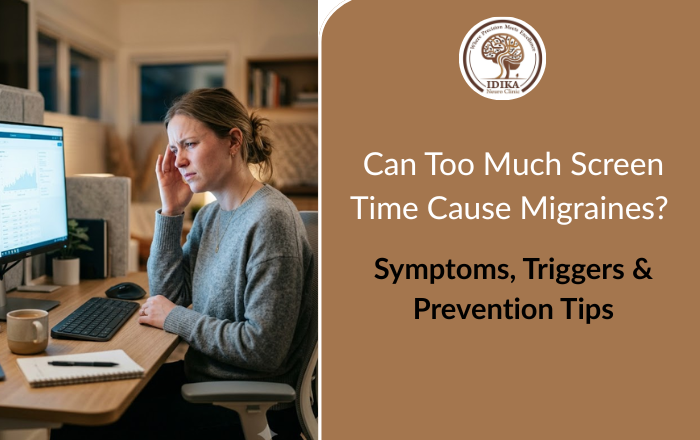
Ever notice how your head starts pounding after a long day of scrolling, video calls, and staring at spreadsheets? You’re not imagining it. Many people who spend hours in front of phones, laptops, and tablets report throbbing headaches that show up almost like clockwork by evening.
Here’s the tricky part: screens don’t directly cause migraines the way a virus causes a cold. But for people who are already prone to migraines, screens can absolutely act as a trigger. Understanding this connection between screen time and migraines can help you spot patterns early and take steps before the pain takes over your day.
In this blog, we’ll walk through why this happens, what symptoms to watch for, and realistic ways to cut down on screen-related headaches without having to quit your job or your phone.
Yes, excessive screen time can trigger migraines in people who are already prone to them. Blue light exposure, screen glare, poor posture, and reduced blinking cause eye strain and tension, which can set off a migraine attack in sensitive individuals — though screens themselves don’t directly cause migraine disease.
Quick Summary Box
Key Takeaways
- Screen time and migraines are linked mainly through eye strain, blue light sensitivity, and poor posture, not a direct cause-effect relationship.
- Common triggers include digital eye strain, screen glare, flickering light, and long uninterrupted screen sessions.
- Symptoms often include throbbing head pain, light sensitivity, blurred vision, and neck stiffness.
- The 20-20-20 rule, proper lighting, and scheduled breaks can meaningfully reduce screen time headache episodes.
- Frequent or worsening migraines should always be evaluated by a neurologist.
Understanding the Link Between Screen Time and Migraines
What Happens When You Stare at Screens Too Long?
When you’re focused on a screen, your blink rate can drop by more than half. Less blinking means drier eyes, more strain, and eventually, tension that radiates from your eyes to your temples and forehead. Add in glare, small text, and the natural tendency to lean your neck forward, and you’ve got a recipe for a headache — or in susceptible people, a full migraine attack.
This is often called computer vision syndrome or digital eye strain, and while it’s not the same thing as a migraine, it frequently acts as the trigger that sets one off.
Why Some People Are More Affected Than Others
Not everyone who uses a screen all day gets migraines. Migraine is a neurological condition, and people who have it tend to have a more sensitive nervous system that reacts strongly to certain triggers — light, sound, stress, sleep changes, and yes, screens included. If you already have a family history of migraine or have had migraine episodes before, your brain may simply be more reactive to the sensory overload screens create.
Common Causes and Triggers
Here are the main ways screens contribute to headache and migraine episodes:
- Blue light exposure, especially in the evening, which can disrupt sleep and lower your migraine threshold
- Screen glare and flicker, which strain the eye muscles
- Reduced blink rate, leading to dry, irritated eyes
- Poor posture, like a forward-leaning neck (sometimes called “tech neck”), which tightens shoulder and neck muscles
- Prolonged focus without breaks, which fatigues the eye muscles responsible for focusing
- Bright or poorly adjusted screen brightness, especially in dark rooms
- Sleep disruption from late-night screen use, which is itself a known migraine trigger
Risk Factors
You may be more vulnerable to screen time headache episodes if you:
- Already have a diagnosed migraine disorder
- Wear an outdated eyeglass or contact lens prescription
- Work long hours on computers without breaks
- Have underlying dry eye or vision problems
- Experience high stress or poor sleep quality
- Are sensitive to light (photophobia)
Symptoms to Watch For
Migraines triggered by screen use often show a mix of eye-related and neurological symptoms.
| Digital Eye Strain Symptoms | Migraine Symptoms |
|---|---|
| Tired, dry, or itchy eyes | Throbbing or pulsing head pain |
| Blurred vision after screen use | Sensitivity to light and sound |
| Difficulty focusing | Nausea or vomiting |
| Mild headache around the eyes | Visual aura (flashing lights, zigzag lines) |
| Neck and shoulder tightness | Pain that worsens with activity |
If your headache stays limited to eye strain and mild tension, it may resolve with rest. But if it escalates into throbbing pain with nausea or visual disturbances, you’re likely dealing with a true migraine episode.
Migraine vs Tension Headache: What’s the Difference?
| Feature | Migraine | Tension Headache |
|---|---|---|
| Pain type | Throbbing, pulsing | Dull, band-like pressure |
| Location | Often one-sided | Both sides, forehead/back of head |
| Triggers | Screens, light, hormones, stress | Stress, poor posture, fatigue |
| Associated symptoms | Nausea, light/sound sensitivity, aura | Mild sensitivity, muscle tightness |
| Duration | 4–72 hours if untreated | 30 minutes to several hours |
Knowing which type you’re dealing with helps guide the right treatment approach, so this distinction matters more than people realize.
Migraine vs Tension Headache: What’s the Difference?
| Feature | Migraine | Tension Headache |
|---|---|---|
| Pain type | Throbbing, pulsing | Dull, band-like pressure |
| Location | Often one-sided | Both sides, forehead/back of head |
| Triggers | Screens, light, hormones, stress | Stress, poor posture, fatigue |
| Associated symptoms | Nausea, light/sound sensitivity, aura | Mild sensitivity, muscle tightness |
| Duration | 4–72 hours if untreated | 30 minutes to several hours |
Knowing which type you’re dealing with helps guide the right treatment approach, so this distinction matters more than people realize.
Treatment Options
Treatment depends on how frequent and severe your migraines are, and it should always be personalized by a qualified healthcare professional rather than self-directed.
Medicines
Doctors may recommend:
- Acute pain relief: NSAIDs or triptans for active migraine attacks
- Preventive medication: for people with frequent migraines (more than 4 days a month), such as beta-blockers, certain antidepressants, or anti-CGRP medications, depending on individual suitability
Medication choice always depends on your specific health profile, so a neurologist’s guidance is essential rather than choosing over-the-counter options long-term.
Non-Medical Treatment
- Vision correction with updated prescription glasses
- Blue-light filtering lenses (evidence is still mixed, but many patients report symptom relief)
- Physical therapy for neck and shoulder tension
- Stress management techniques like relaxation training or biofeedback
Home Care and Screen Time Management
Here are practical steps that genuinely help reduce screen time headache episodes:
- Follow the 20-20-20 rule – every 20 minutes, look at something 20 feet away for 20 seconds.
- Adjust screen brightness to match your surroundings; avoid using bright screens in dark rooms.
- Increase text size so you’re not straining to read small fonts.
- Blink consciously and consider using preservative-free lubricating eye drops if your eyes feel dry.
- Set up your workstation ergonomically — screen at eye level, feet flat, shoulders relaxed.
- Limit screen use before bed, ideally stopping 30–60 minutes before sleep.
- Take real breaks, standing up and moving rather than switching to your phone during “rest” time.
Simple Neck and Eye Exercises
- Gentle neck rolls and shoulder shrugs every hour
- Palming exercise: cup your palms over closed eyes for a minute to relax eye muscles
- Focus shifting: alternate focus between near and far objects a few times
Diet and Lifestyle Tips for Migraine Prevention
- Stay well hydrated throughout the day
- Maintain consistent sleep and wake times
- Avoid skipping meals, as low blood sugar can trigger migraines
- Limit excessive caffeine, and avoid sudden withdrawal from it
- Manage stress through regular physical activity, even short walks
- Track personal triggers in a headache diary, including screen habits, food, sleep, and stress levels
Latest Research on Digital Eye Strain and Migraine
Ongoing research continues to explore how blue light and screen exposure interact with migraine pathways in the brain, particularly around photophobia and light sensitivity mechanisms. Organizations like the American Migraine Foundation and American Academy of Neurology continue to update guidance on lifestyle and environmental migraine triggers, including screen-related factors, as more data emerges. Patients are encouraged to follow updated clinical guidance rather than relying solely on anecdotal claims about blue light glasses or filters.
Frequently Asked Questions
1. Can too much screen time actually cause migraines?
Screens don’t directly cause migraine disease, but they’re a well-known trigger for people who already have migraines. Eye strain, blue light, and poor posture from screen use can set off an attack in sensitive individuals.
2. How many hours of screen time is considered risky for migraines?
There’s no fixed number, but symptoms often appear after 2+ hours of continuous, uninterrupted screen use, especially without breaks or proper lighting.
3. Do blue light glasses really help with migraines?
Some patients report fewer headaches with blue light filtering lenses, but current research shows mixed results specifically for migraine prevention. They may still help with general eye strain.
4. What’s the difference between digital eye strain and a migraine?
Digital eye strain usually causes mild discomfort around the eyes and resolves with rest. Migraine involves throbbing pain, nausea, and light sensitivity, and can last hours to days.
When Should You Consult a Neurologist?
If your headaches are becoming more frequent, more intense, or are starting to interfere with work, sleep, or relationships, it’s worth getting a proper neurological evaluation rather than pushing through it. This is especially true if you notice visual disturbances, persistent symptoms despite lifestyle changes, or any new neurological signs. Early evaluation often leads to better long-term management, since untreated migraine patterns can become harder to control over time.
Meet Our Neurologist
If you’ve been dealing with recurring headaches or migraines and you’re not sure why, it helps to talk to someone who specializes in exactly this.
Dr. Shruti Agrawal is a neurologist with over 9+ years of experience diagnosing and treating migraine and other headache disorders. She sees patients at:
- Idika Neuro Clinic, Andheri West
- AllCure Super Speciality Hospital, Jogeshwari East
Whether your headaches seem tied to screen use, stress, sleep, or something else entirely, Dr. Agrawal can help pinpoint what’s actually triggering them and work with you on a treatment plan that fits your lifestyle — not a one-size-fits-all approach.
Don’t let unexplained headaches control your day-to-day life.
Book an Appointment with Dr. Shruti Agrawal
Visit either clinic location for a thorough neurological evaluation and take the first step toward understanding what’s really triggering your migraines.