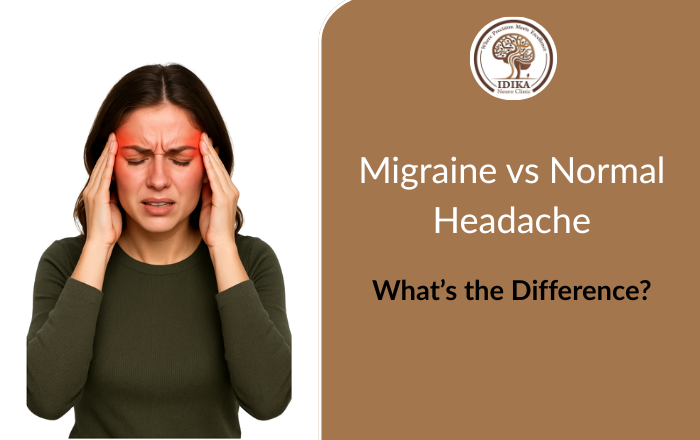
You wake up with a pounding head, nausea, and can’t stand even a sliver of light. Is it just a headache — or something more? Millions of people ask this question every day, and getting it wrong means years of ineffective treatment and unnecessary suffering.
According to the World Health Organization, migraine affects approximately 1 in 7 people globally. In India alone, over 150 million people live with migraine yet a large majority remain undiagnosed or mismanaged. Understanding the difference between a migraine and a normal headache is the first step toward real relief.
What Is a Normal Headache?
The most common everyday headache is the tension-type headache (TTH). It feels like a dull, pressing band of pressure around both sides of the head. It’s typically:
- Mild to moderate in intensity
- Bilateral (affecting both sides)
- Not worsened by physical activity
- Free of nausea, vomiting, or sensitivity to light and sound
- Lasting anywhere from 30 minutes to a few hours
Common causes include stress, dehydration, eye strain, poor posture, and sleep deprivation. Tension headaches usually respond well to paracetamol, ibuprofen, rest, and hydration.
What Is a Migraine?
A migraine is not just a “bad headache.” It is a neurological disease involving the brain’s trigeminal nerve system, neurovascular pathways, and a key inflammatory molecule called CGRP (Calcitonin Gene-Related Peptide). It has four distinct phases:
1. Prodrome (hours to 2 days before): Mood shifts, food cravings, yawning, neck stiffness, and fatigue signal an incoming attack.
2. Aura (in ~25–30% of cases): Visual disturbances like zigzag lines, blind spots, or flashing lights. Some people experience tingling, numbness, or temporary speech difficulty.
3. Headache Phase (4–72 hours): Intense, throbbing, usually one-sided pain. Worsened by movement. Accompanied by nausea, vomiting, and extreme sensitivity to light, sound, and sometimes smell.
4. Postdrome (“migraine hangover”): After pain resolves, exhaustion, brain fog, and mood changes can linger for 24–48 hours.
Key Differences at a Glance
| Feature | Normal Headache | Migraine |
|---|---|---|
| Pain location | Both sides | Usually one side |
| Pain type | Dull, pressing | Throbbing, pulsating |
| Intensity | Mild–moderate | Moderate–severe |
| Duration | 30 min–few hours | 4–72 hours |
| Nausea/vomiting | Rare | Very common |
| Light/sound sensitivity | Uncommon | Hallmark symptom |
| Aura | Never | In ~30% of cases |
| Worsens with activity | No | Yes |
| Postdrome phase | Absent | Common |
Common Migraine Triggers
Migraines don’t strike randomly they’re triggered by identifiable factors, and these vary by individual:
- Hormonal changes: Menstrual cycle, contraceptive pills, perimenopause
- Diet: Skipped meals, caffeine withdrawal, alcohol (especially red wine), aged cheese
- Sleep disruption: Too little or too much sleep
- Stress: Including the “let-down” effect after stress resolves
- Sensory stimuli: Bright lights, strong perfumes, loud environments
- Weather: Barometric pressure changes
Think of migraine threshold as a bucket — multiple small triggers stack up until the bucket overflows into an attack. Identifying your personal triggers through a headache diary is one of the most effective management tools.
When Should You See a Neurologist?
Seek medical attention if:
- Headaches occur 4 or more days per month
- Pain is severe, throbbing, or one-sided
- You experience nausea, vomiting, or light/sound sensitivity
- Visual disturbances accompany your headaches
- Over-the-counter medications stop working or are used very frequently
- Headaches are interfering with work, sleep, or daily life
Seek emergency care immediately if you experience the worst headache of your life (thunderclap onset), headache with fever and stiff neck, or headache with confusion, weakness, or vision loss.
Treatment Overview
Tension headaches respond well to OTC analgesics, hydration, rest, and stress relief.
Migraine treatment has two tiers:
- Acute treatment: Triptans (e.g., sumatriptan, rizatriptan) are the gold standard for stopping an attack. NSAIDs and antiemetics also help. Earlier treatment = better outcome.
- Preventive treatment: For patients with 4+ migraine days per month — options include beta-blockers, topiramate, amitriptyline, flunarizine, and the newest class, CGRP monoclonal antibodies (the first medications specifically developed for migraine prevention).
Non-drug strategies with strong evidence include regular sleep, consistent meal timing, aerobic exercise, biofeedback, and cognitive behavioral therapy.
Expert Migraine Care in Mumbai: Dr. Shruti Agrawal, Idika Neuro Clinic
If you’re in Mumbai and living with recurring, undiagnosed, or poorly managed headaches, specialist neurological care can be genuinely life-changing.
Dr. Shruti Agrawal is a trusted neurologist at Idika Neuro Clinic, Andheri, with 9+ years of specialized experience in treating migraine, chronic headache, and complex neurological disorders.
Dr. Agrawal brings a precise, patient-first approach accurately distinguishing between migraine types and other headache disorders, building personalized treatment plans, and combining the latest pharmacological options with lifestyle and trigger management strategies.
You should consult Dr. Shruti Agrawal if:
- You’ve never had a formal neurological evaluation for your headaches
- Painkillers are no longer effective or you’re taking them too often
- You suspect migraines but haven’t been properly diagnosed
- Your headaches are chronic, worsening, or disrupting your life
Name – Dr. Shruti Agrawal | Neurologist in Andheri West | Epilepsy Specialist | Idika Neuro Clinic
Address: Alpine Primo, B-7, JP Rd, opposite Navrang Cinema, Fish Market Area, Navneeth Colony, Andheri West, Mumbai, Maharashtra 400058
Phone: 72082 80587
Stop guessing. Start healing. Book your consultation with Dr. Shruti Agrawal today.
Conclusion
A normal headache and a migraine are fundamentally different conditions in their biology, symptoms, severity, and treatment. Treating a migraine like a tension headache delays relief and often makes things worse over time. With the right diagnosis and a specialist-guided plan, migraines can be effectively controlled.
If your head pain is recurring, disabling, or simply not responding to basic treatment — don’t wait. The right neurologist changes everything.
FAQs
Q1. Can stress alone cause a migraine?
Stress is among the most commonly reported triggers. However, interestingly, stress itself may not trigger the attack — it’s often the “let-down” period after stress (like the weekend after a stressful workweek) that causes migraines.
Q2: Is it safe to take painkillers every time I get a migraine?
Taking acute medications more than 10–15 days per month leads to Medication Overuse Headache (MOH). If you’re using pain relief that frequently, consult a neurologist for preventive therapy.
Q3. When should I go to the ER for a headache?
Go immediately if: it’s the worst headache of your life (thunderclap), accompanied by fever and stiff neck, associated with confusion, weakness, vision loss, or seizures, or follows a head injury.