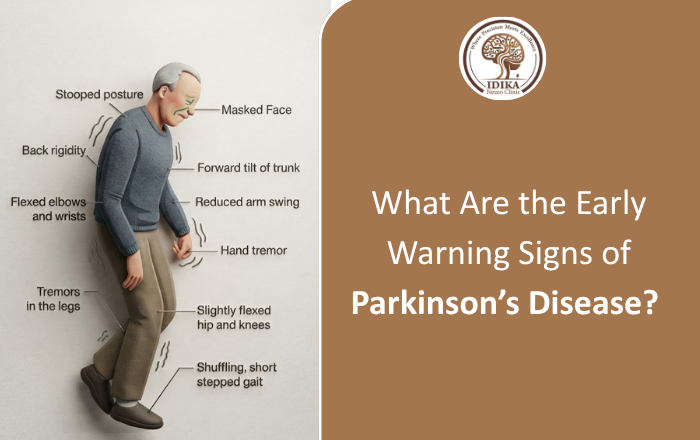
The early warning signs of Parkinson’s disease are often small and easy to brush aside. A slight shake in one hand at rest, smaller handwriting, stiffness in a shoulder, a softer voice or a less expressive face are common examples. Some people also notice changes unrelated to movement, such as a weaker sense of smell, constipation or acting out dreams during sleep.
None of these signs on its own means you have Parkinson’s. Many have everyday causes. But if you or your family notice two or more of them slowly building up over months, it is worth getting checked by a neurologist.
What Is Parkinson’s Disease?
Parkinson’s disease is a long term brain condition that mainly affects movement. It happens when nerve cells in a part of the brain called the substantia nigra gradually stop working. These cells make dopamine, a chemical messenger that helps the body move smoothly.
As dopamine levels fall, movements become slower and stiffer, often on one side of the body first. According to the National Institute of Neurological Disorders and Stroke (NINDS), some people with Parkinson’s never develop a tremor at all.
What Are the Early Warning Signs of Parkinson’s Disease?
Symptoms usually start mild and build up gradually. As the NHS points out, their order and severity differ from person to person. These are the movement related signs to watch for.
1. A Tremor in One Hand at Rest
A slight, rhythmic shaking in a finger, thumb, hand or chin is the most familiar sign. In Parkinson’s, it is usually most noticeable when the hand is relaxed, such as resting on the lap while watching TV, and often eases when the hand is used. Some people rub the thumb and forefinger together, a movement doctors call a “pill rolling” tremor.
2. Slower Movements
Doctors call this bradykinesia. Buttoning a shirt or getting up from a chair may take longer than before, and family members often notice it first.
3. Stiffness in the Arms, Legs or Neck
Muscles may feel tight or achy even after moving around. It can start as pain in one shoulder or hip, easily mistaken for arthritis or a frozen shoulder.
4. Smaller Handwriting, Softer Voice and Less Expression
- Micrographia: letters become smaller and words crowd together, often noticed while signing forms.
- Voice changes: speech becomes quiet, hoarse or monotone, and others may keep asking you to repeat yourself.
- Masked face: the face looks serious or blank even when the person is in a good mood.
5. Changes in Walking and Posture
One arm may not swing naturally while walking. Steps can become short or shuffling, and the body may stoop forward.
Early Signs That Are Not About Movement
Parkinson’s also affects smell, sleep, digestion and blood pressure, and some of these changes can appear years before movement problems. The Parkinson’s Foundation lists several of them among its early signs:
- Reduced sense of smell without a cold or blocked nose
- Constipation that is not explained by diet, water intake or medicines
- Acting out dreams, such as shouting or kicking in sleep (REM sleep behaviour disorder)
- Dizziness on standing up from a chair or bed
- Low mood or anxiety, which can start before any movement symptoms
On their own these are common and not a reason to panic. They matter more when they appear alongside the movement signs above.
Is It Parkinson’s or Just Getting Older?
Many of these changes are simply part of ageing. Shaking can come from stress, too much tea or coffee, thyroid problems or certain medicines. Another common condition, essential tremor, usually causes shaking while using the hands, like holding a cup, rather than at rest.
A neurological check is a good idea when:
- Symptoms started on one side of the body
- Changes are slowly getting worse over months
- Several signs appear together, such as tremor with stiffness or slowness
Who Is More Likely to Develop Parkinson’s?
The exact cause is usually unknown. The chance is higher with age (it most often begins in the 60s), in men, in people with a close relative who has Parkinson’s and after long term exposure to certain pesticides. Most cases are not inherited.
How Is Parkinson’s Disease Diagnosed?
No single blood test or scan confirms Parkinson’s. A neurologist diagnoses it mainly through:
- A detailed history of your symptoms
- A neurological examination of movement, muscle tone, balance and walking
- A review of your medicines, since some can cause similar symptoms
- Brain imaging such as an MRI, if needed, to rule out other conditions
Bring a list of your medicines, previous reports, a phone video of the tremor if it comes and goes, and a family member who has noticed the changes.
When Should You See a Neurologist?
Book a consultation if a resting tremor, stiffness or slowness does not go away, or if your walking, balance or voice is changing. Early evaluation helps rule out other causes and, if it is Parkinson’s, lets you plan Parkinson’s disease treatment with your doctor.
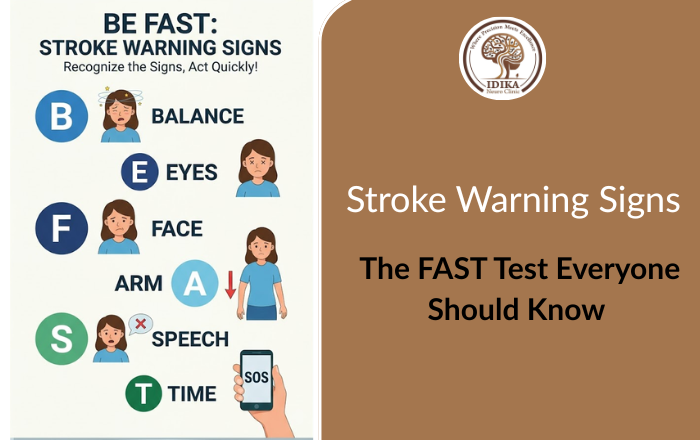
Parkinson’s develops slowly. If weakness on one side, facial drooping or slurred speech appear suddenly, it could be a stroke and needs emergency care. Learn the FAST test for stroke warning signs.
Frequently Asked Questions
1. What is usually the first sign of Parkinson’s disease?
For many people, it is a slight tremor in one hand, finger or thumb while it is resting. But it is not always a tremor. Some first notice slower movements, a stiff shoulder, smaller handwriting or a softer voice, and changes in smell, sleep or bowel habits can come even earlier.
2. Can young people get Parkinson’s disease?
Yes, although it is less common. Parkinson’s most often starts in a person’s 60s, but some people develop symptoms before 50. This is called early onset Parkinson’s disease. Younger people may first notice stiffness or slowness rather than a tremor, so persistent symptoms should be checked at any age.
3. Is every hand tremor a sign of Parkinson’s?
Not necessarily. Many tremors have other causes, such as anxiety, caffeine, thyroid problems, certain medicines or essential tremor. A Parkinson’s tremor typically appears when the hand is at rest and often starts on one side. A neurologist can examine the tremor and tell these conditions apart.
4. Can Parkinson’s disease be cured?
There is currently no cure. However, medicines, regular exercise, physiotherapy and speech therapy can help many people manage their symptoms and stay active. Treatment is planned around each person’s symptoms and is adjusted over time, so regular reviews with a neurologist are an important part of care.
5. How is Parkinson’s different from Alzheimer’s disease?
Parkinson’s mainly affects movement, causing tremor, stiffness, slowness and balance problems. Alzheimer’s disease mainly affects memory, thinking and behaviour. Some people with Parkinson’s develop memory problems in later stages, but the two are separate conditions with different causes and treatment.
Noticed These Signs? Speak With a Neurologist
The early signs of Parkinson’s can be subtle, and many have simpler explanations. A neurological examination is the most reliable way to find the cause, and diagnosis and treatment should always be guided by a qualified doctor.
Dr. Shruti Agrawal is a neurologist (MBBS, MD Medicine, DM Neurology, DrNB Neurology, PDF Epilepsy) with 9+ years of experience, and has served as Assistant Professor in the Department of Neurology at KEM Hospital, Mumbai. She sees patients with tremors, Parkinson’s disease and other movement disorders at Idika Neuro Clinic in Andheri West and also consults at AllCure Super Speciality Hospital, Jogeshwari East.
Name: Dr. Shruti Agrawal | Neurologist in Andheri West | Idika Neuro Clinic
Address: B-7, Alpine Primo, Opposite Navrang Cinema, JP Road, Andheri West, Mumbai, Maharashtra 400058
Phone: 72082 80587
Have questions? Contact us on WhatsApp: Click here to chat with us