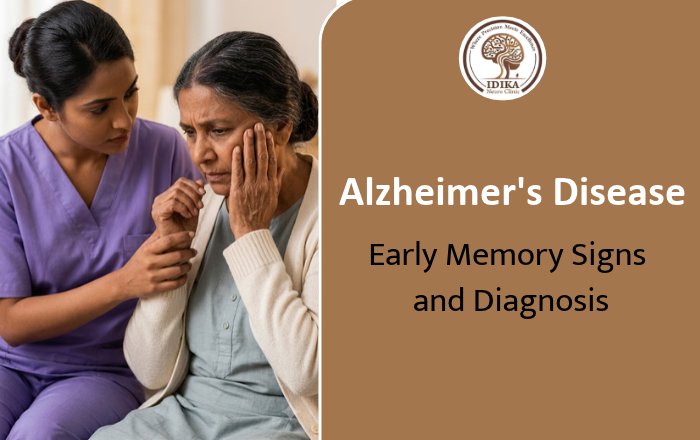
Everyone forgets things from time to time. A name that will not come, a missed appointment or keys left in the wrong place are common at any age. But when forgetfulness becomes more frequent, starts to affect daily life and slowly gets worse, it may be a sign of a condition such as Alzheimer’s disease.
This guide explains the early memory signs of Alzheimer’s disease, how they differ from normal ageing, and how a neurologist reaches a diagnosis. It is meant to help families recognise when it is time to seek an evaluation.
What Is Alzheimer’s Disease?
Alzheimer’s disease is a progressive brain disorder that affects memory, thinking, behaviour and the ability to carry out daily activities. It is the most common cause of dementia, especially in older adults. Dementia is the broader term for a decline in thinking that interferes with everyday life, and Alzheimer’s is one of its causes.
The condition develops slowly. Changes in the brain may begin years before symptoms are noticed, which is why the early signs are often missed or put down to age.
Normal Ageing or Early Alzheimer’s?
Telling the two apart is not always simple. These examples may help:
- Normal ageing: forgetting a name but recalling it later, or occasionally misplacing an item and retracing steps to find it.
- Possible early Alzheimer’s: forgetting recent conversations or events again and again, asking the same question repeatedly, or being unable to retrace steps.
The key difference is a pattern. When memory problems are persistent, slowly worsening and interfere with work, finances, driving or household tasks, a medical evaluation is advisable.
Early Memory Signs of Alzheimer’s Disease
1. Forgetting Recently Learned Information
Difficulty remembering conversations, appointments or events from the last few days is often the first sign. Older memories may remain clear for longer.
2. Repeating Questions or Stories
A person may ask the same thing several times in a short period without realising it.
3. Misplacing Things and Not Being Able to Retrace Steps
Items may be put in unusual places, such as a phone in the refrigerator, and the person may not be able to work out where they went.
4. Trouble With Planning and Familiar Tasks
Following a recipe, managing bills, using a phone or travelling a known route may become hard.
5. Confusion About Time or Place
Losing track of dates, seasons or the way home can happen, even in familiar places.
6. Difficulty Finding Words
People may stop in the middle of a conversation, struggle to name common objects or find it hard to follow a discussion.
7. Changes in Mood or Behaviour
Withdrawal from social activities, irritability, anxiety, suspicion or loss of interest in hobbies can accompany memory changes.
Other Causes of Memory Problems
Not all memory loss is Alzheimer’s. Some causes can be treated, which is why an evaluation matters. They include:
- Vitamin B12 deficiency
- Thyroid problems
- Depression or anxiety
- Poor sleep or sleep apnoea
- Side effects of some medicines
- Hearing or vision problems
- Other brain conditions, such as stroke or Parkinson’s disease
How Is Alzheimer’s Disease Diagnosed?
There is no single test that confirms Alzheimer’s in every case. A neurologist usually builds the diagnosis from several parts.
Detailed History
The doctor asks about the symptoms, how they began and how they have changed. A family member or caregiver is often very helpful here, because the person may not notice the changes.
Neurological Examination and Memory Testing
The doctor checks reflexes, strength, balance and other brain functions. Short cognitive tests assess memory, attention, language and problem solving. Further detailed testing is sometimes done.
Blood Tests
These help find or rule out treatable causes such as vitamin deficiencies or thyroid disease.
Brain Imaging
An MRI or CT scan of the brain can show changes in brain structure and help rule out other conditions such as a tumour, stroke or fluid build-up. In selected cases, the doctor may suggest additional tests.
The doctor then puts these findings together to decide whether the symptoms point to Alzheimer’s disease, another type of dementia or a different cause.
What Happens After a Diagnosis?
Alzheimer’s disease currently has no cure. However, an early diagnosis allows the family and doctor to plan care. Management may include medicines that support memory and thinking, advice on daily routine, physical activity, sleep, nutrition and safety at home, and support for caregivers. The plan is decided by the treating neurologist and reviewed regularly. Our page on Alzheimer’s evaluation and care in Andheri West explains how this is approached at the clinic.
How Families Can Help Early On
Noticing changes is often the family’s role. A few simple steps can make the process easier:
- Speak gently and avoid blaming the person for forgetting.
- Keep a short diary of incidents, such as missed medicines or getting lost.
- Encourage a regular routine, light physical activity and social contact.
- Keep important items, such as keys and glasses, in a fixed place.
- Do not wait for symptoms to become severe before seeking an opinion.
How to Prepare for a Visit
- Note recent memory or behaviour changes, with examples and dates.
- Bring a family member or caregiver who knows the person well.
- Carry previous medical records, scan reports and a list of all medicines.
- Mention other health conditions, such as diabetes, blood pressure or thyroid problems.
Frequently Asked Questions About Alzheimer’s Disease
1. Is forgetfulness always a sign of Alzheimer’s?
No. Stress, lack of sleep, low mood, vitamin deficiency and other causes can affect memory. Persistent and worsening problems should be checked.
2. Is dementia the same as Alzheimer’s?
No. Dementia is a general term, and Alzheimer’s disease is the most common cause of it. Other causes include vascular problems and other brain diseases.
3. At what age do early signs appear?
Alzheimer’s is more common after 65, but symptoms can begin earlier in some people. Any persistent memory problem needs medical attention at any age.
4. Can Alzheimer’s be cured?
There is no cure at present. Treatment aims to support daily functioning and quality of life, and an early assessment gives families more time to plan.
5. Do I need a brain scan?
Often, yes. A scan helps rule out other conditions, but the neurologist decides which tests are needed after examining the person.
Noticed These Signs? Speak With a Neurologist
If you or a family member has noticed ongoing memory changes, an evaluation can bring clarity. Dr. Shruti Agrawal is a neurologist (MBBS, MD Medicine, DM Neurology, DrNB Neurology, PDF Epilepsy) with 9+ years of experience, and has served as Assistant Professor in the Department of Neurology at KEM Hospital, Mumbai. She sees patients with memory and cognitive concerns at Idika Neuro Clinic in Andheri West.
Name: Dr. Shruti Agrawal | Neurologist in Andheri West | Idika Neuro Clinic
Address: Alpine Primo, B-7, JP Rd, opposite Navrang Cinema, Fish Market Area, Navneeth Colony, Andheri West, Mumbai, Maharashtra 400058
Phone: 72082 80587
You can also request an appointment online.
This article is for general information and does not replace a medical consultation.